What the Iced Coffee Affair Says about Work in 2026
It was never really about iced coffee. It was about power, and how completely we’ve learned to stop seeing it.
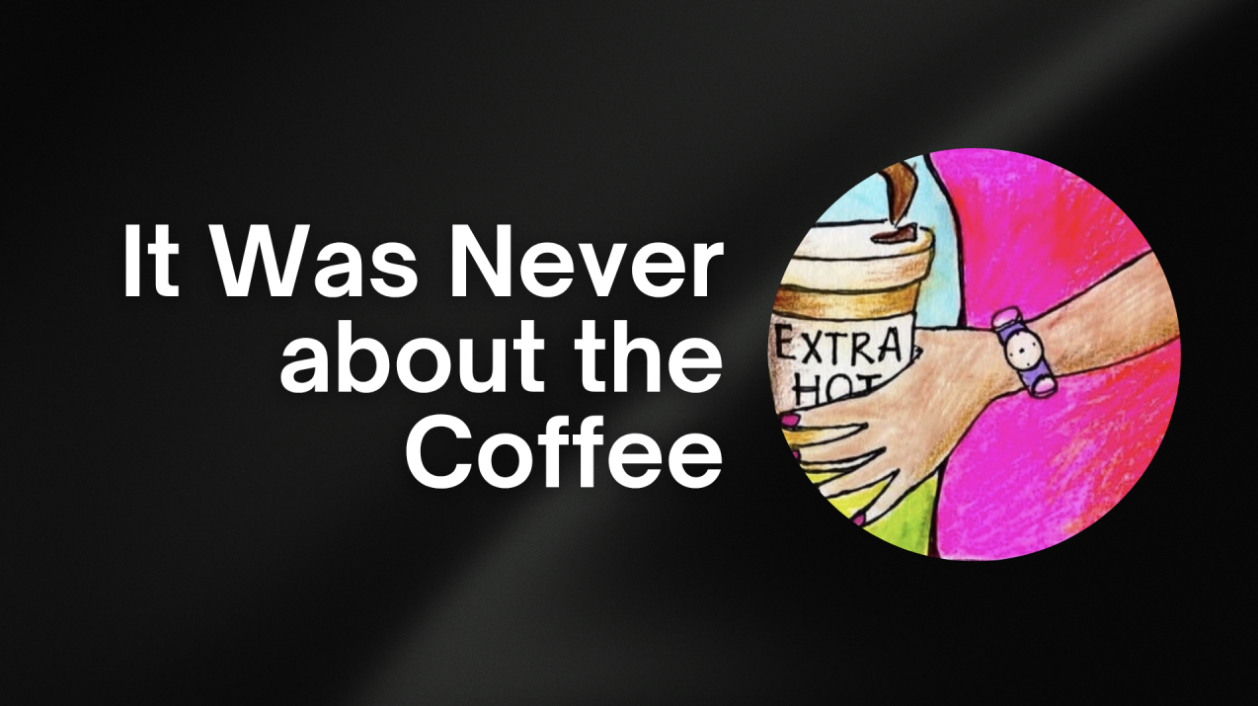
Dear friends,
I asked a simple question this week:
Is it unprofessional to bring an iced coffee to a job interview?
Thousands of people weighed in.
You would think I had asked whether candidates should be permitted to conduct the interview in their underwear.
People have VERY strong feelings about iced coffee.
Some people said bringing an iced coffee to an interview is rude, disrespectful and shockingly unprofessional.
Others said the entire controversy is ridiculous. It’s a beverage. Who cares?
But after reading thousands of comments, I noticed something much more interesting.
Almost nobody asked:
Why should an interviewer’s personal feelings about iced coffee have anything to do with whether another person gets a job?
The Question Nobody Asked
That question is much bigger than coffee.
We have become so accustomed to the enormous power imbalance in hiring that we barely see it.
A hiring manager can dislike your shoes.
Your handshake.
Your laugh.
Your clothes.
The way you sit.
The way you answer a question.
The fact that you brought coffee.
The fact that you didn’t bring coffee.
The fact that you accepted the water they offered you.
The fact that you didn’t.
Walking on Eggshells
And instead of asking why one person’s collection of preferences, prejudices, pet peeves and inherited ideas about “professionalism” should have this much influence over another person’s livelihood, we coach the job seeker.
Don’t do that.
Don’t wear that.
Don’t say that.
Don’t ask that.
Don’t bring that.
Watch your hands.
Watch your tone.
Watch your facial expressions.
Research the interviewer.
Read the room.
Mirror their energy.
Send the thank-you note.
Don’t send it too quickly.
For heaven’s sake, don’t arrive carrying iced coffee.
At some point we might want to ask why the person who needs the job is expected to perform this elaborate court ritual in the first place.
An Audience with the Lord of the Manor
We talk about hiring as though two parties are deciding whether it makes sense to work together.
But a tremendous amount of our job-search advice reveals that we don’t actually believe that.
We believe one party is petitioning the other, throwing themselves at the mercy of the interviewer.
That's what traditional career advice teaches candidates to do.
That’s why the medieval analogy keeps occurring to me.
Imagine approaching the local lord in 1287 and asking permission to grow carrots on a tiny patch of land where your family lives, but which he owns—and from which he gets 90% of your family's vegetable output every year for his generosity in letting you live there. (And fight in his wars if he starts any.)
At a meeting like that, a rare and valuable audience with the lord, you don't sound or act like his equal. Heavens, no! Instead, you follow these rules:
Stand properly.
Speak respectfully.
Don’t annoy him.
Don’t question his assumptions.
And for God’s sake, don’t bring an iced coffee.
At least a medieval serf knew he was a serf.
We Learned the Rules Too Well
What fascinates me about modern working life is the extent to which we can reproduce the rituals of deference ourselves — and then teach them to one another as wisdom.
We call it “professionalism.”
We tell job seekers they have to learn the rules.
We tell them that if one tiny, completely irrelevant behavior rubs an interviewer the wrong way, that could be it for your candidacy.
And somehow, we regard that as perfectly normal.
Hey, them’s the breaks. It’s just life. That’s how it works.
Why?
Why isn’t the hiring manager expected to exercise professional judgment?
Why isn’t that part of professionalism?
If I’m hiring an accountant, an engineer, a marketing director or a customer service manager, my job is to figure out whether this person can do the work, whether they want to do it, whether we can give them what they need to succeed and whether we can work well together.
My job is not to determine whether they were raised according to my particular version of good manners.
If this is really a “business meeting,” as many commenters insisted, then let's treat it like one.
Two adults are exploring whether it makes sense to work together. One of them isn't appearing before the other for inspection.
That doesn’t mean behavior never matters.
Of course it does.
If someone is cruel to the receptionist, that tells you something.
If they repeatedly interrupt people, that tells you something.
If they lie about their experience, that tells you something.
Those things have some conceivable relationship to working with other human beings.
They are evidence.
An iced coffee is not evidence.
And that distinction matters enormously.
Because every time we allow “I just didn’t like something about them” to masquerade as professional judgment, we create another hiding place for bias.
We also make hiring worse.
The best candidate does not necessarily know your private rulebook.
The best candidate may not have spent 20 years learning corporate rituals.
The best candidate may come from another industry, another generation, another country, another economic background or simply another conception of what constitutes a business meeting.
Maybe they walked three blocks from the train carrying the coffee they bought on the way.
Who cares?
Apparently, a lot of people.
And that is why the Great Iced Coffee Debate is worth talking about.
It was never really about iced coffee.
It was about power.
And about something even more interesting:
How thoroughly we can absorb a power structure until we stop seeing it as a power structure at all.
We just call it “the way things are.”
And then we teach the next person how to survive it.
Subscribe to Grow Your Flame and get our eBook Finding Your Path as an instant download. Then stay tuned — every month, there's a brand-new Prize Inside!